Most news is written for everyone. This is written for you.
Tell me what you do and up to three subjects you need to keep up with. Every Monday morning an AI model goes through the original sources and drafts a proper magazine about them in plain English, with every claim numbered. I read every issue before it goes to you, take out anything I cannot stand behind, and send it as a PDF made for a tablet or paper.
Three steps, then it arrives every Monday.
There is no app to open and no feed to keep up with. You answer a few questions once, and from then on the magazine finds you on Monday morning.
Ask for an issue
digimaggi is being written for its first readers now, and those issues are free. When it opens properly there will be one plan, planned at $69 a month or $690 a year, and you will hear the final number from me before anything is ever charged.
Answer seven questions
What you do, where you work, up to three subjects the issue should cover, how much you already know, and what an issue should leave you with. Two optional ones: up to five names for the watchlist, and the publications you already trust. Five minutes, and you can change any of it later by replying to an issue.
Monday morning, it arrives
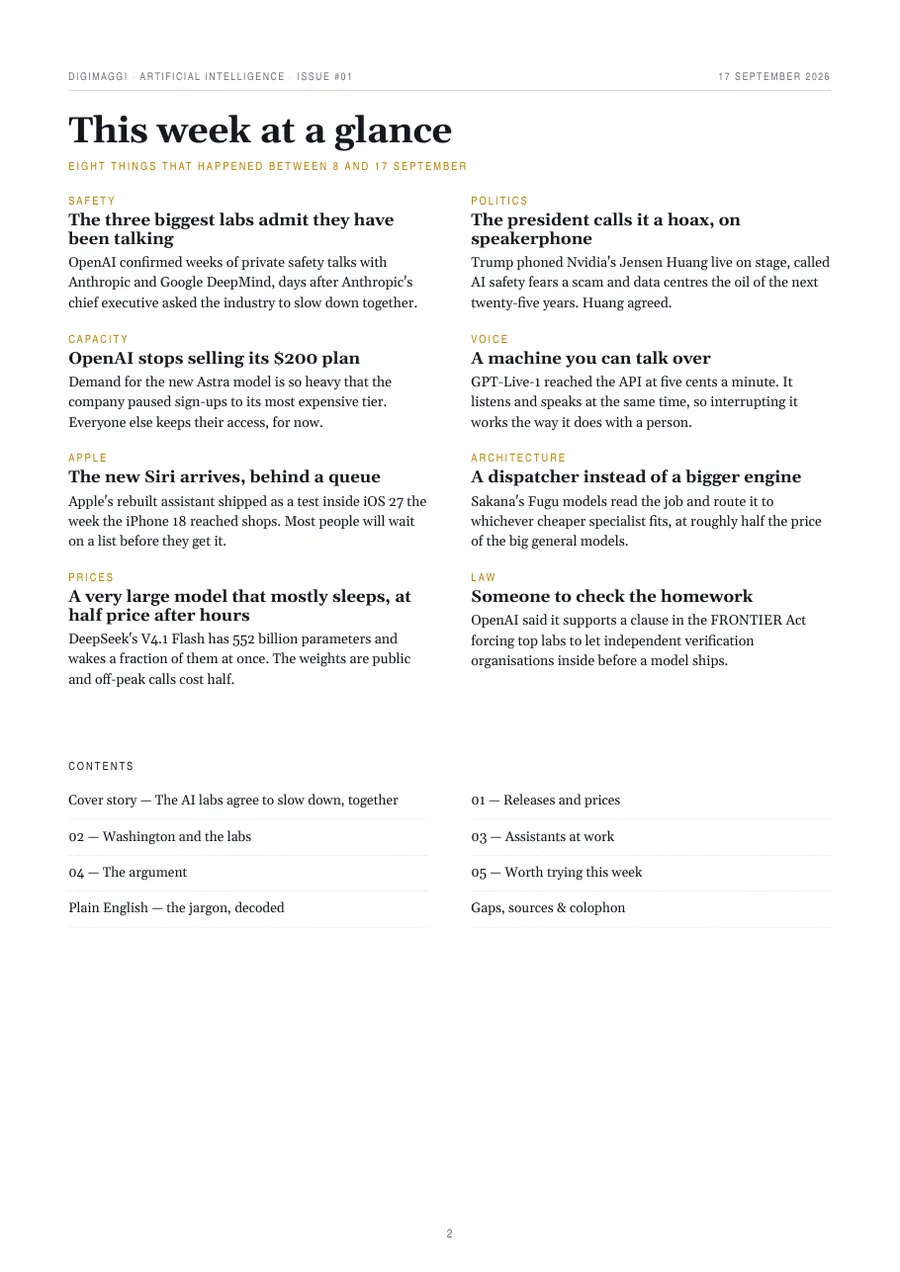
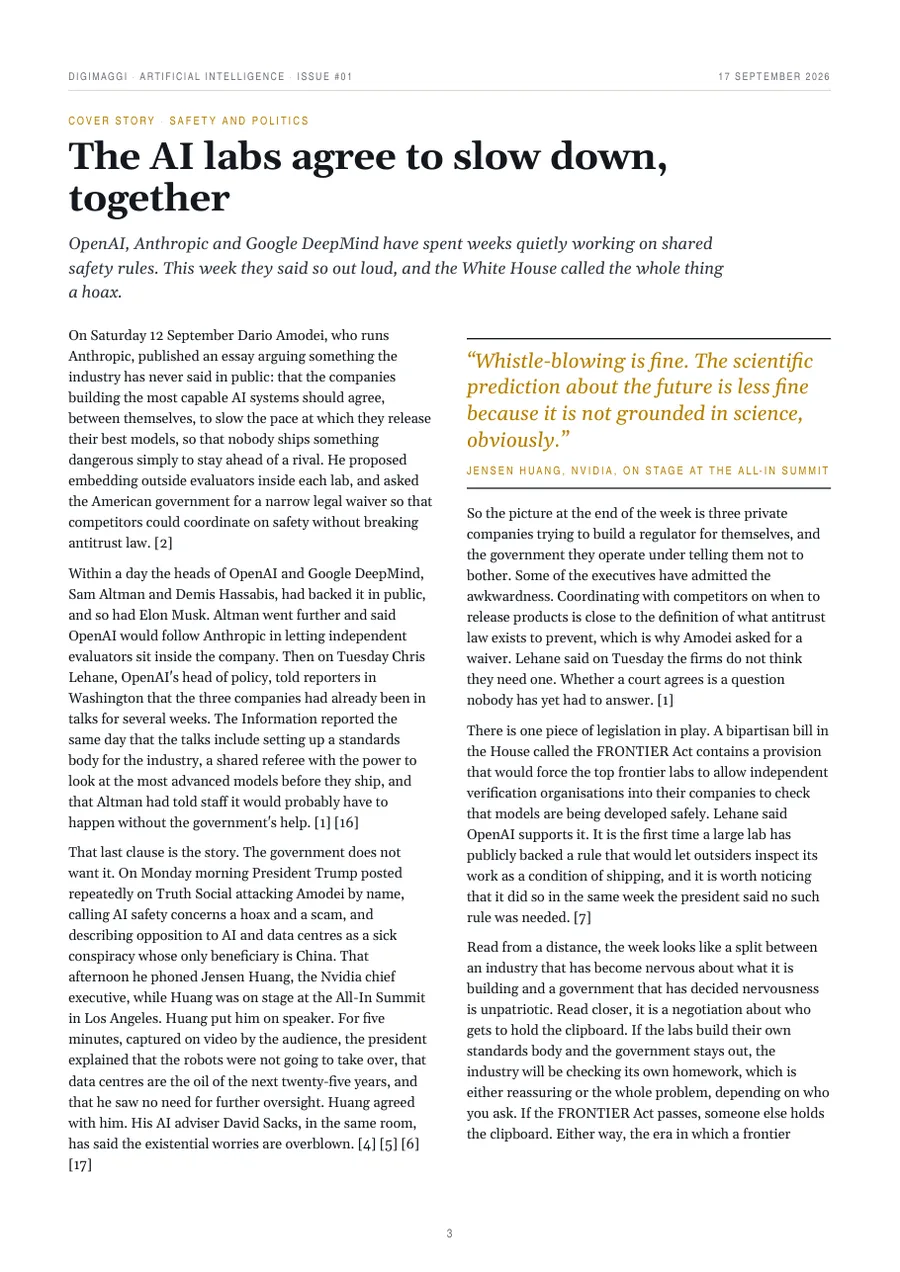
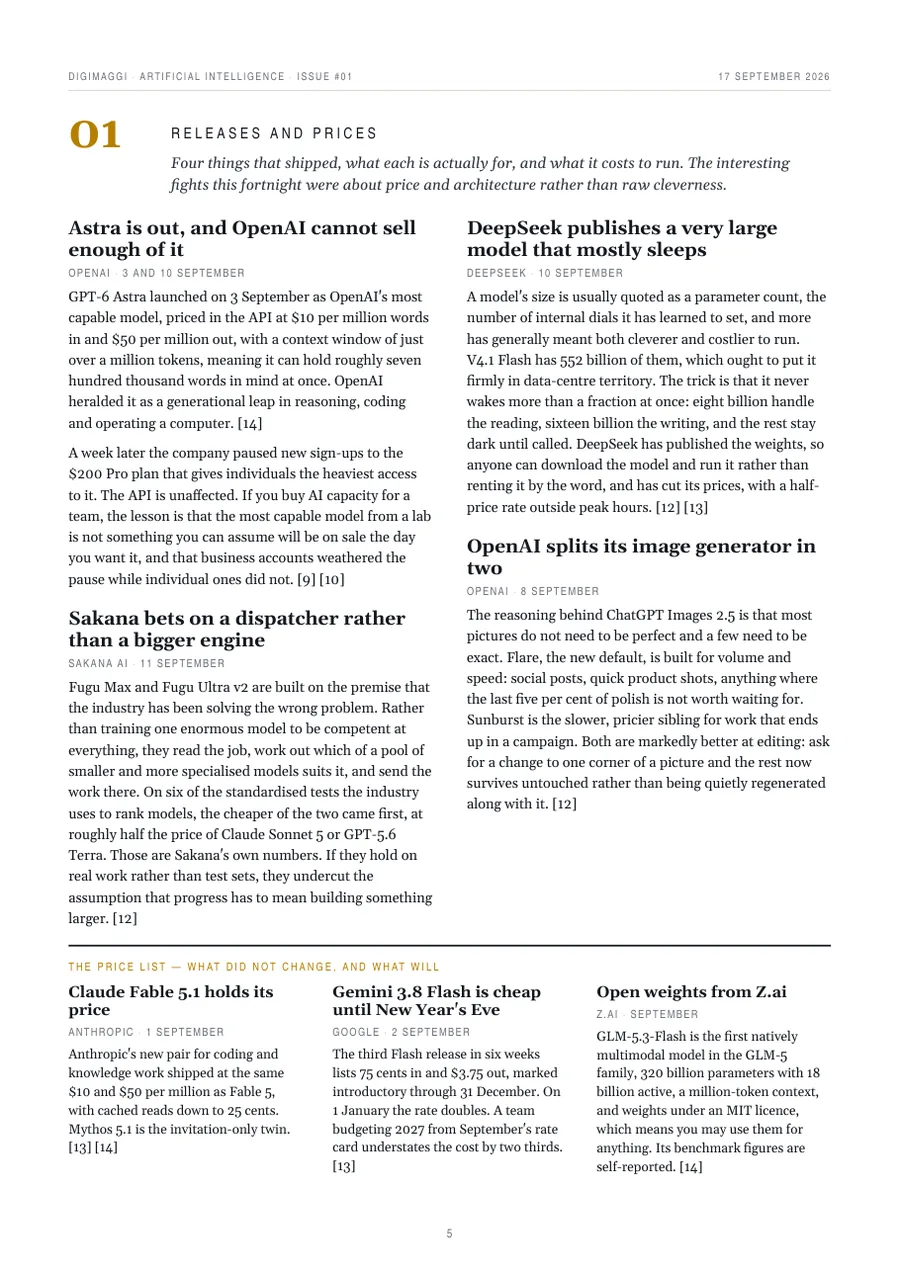
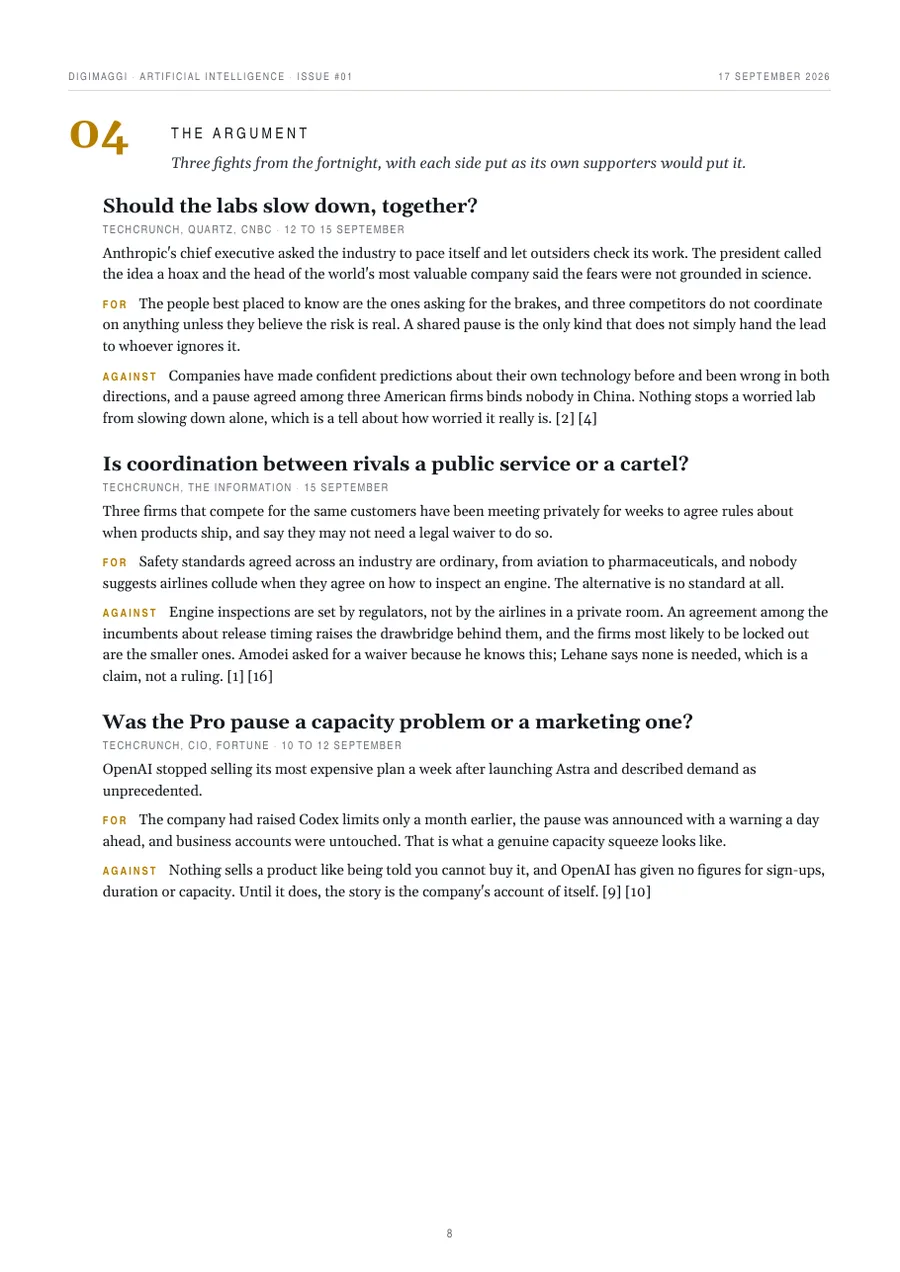
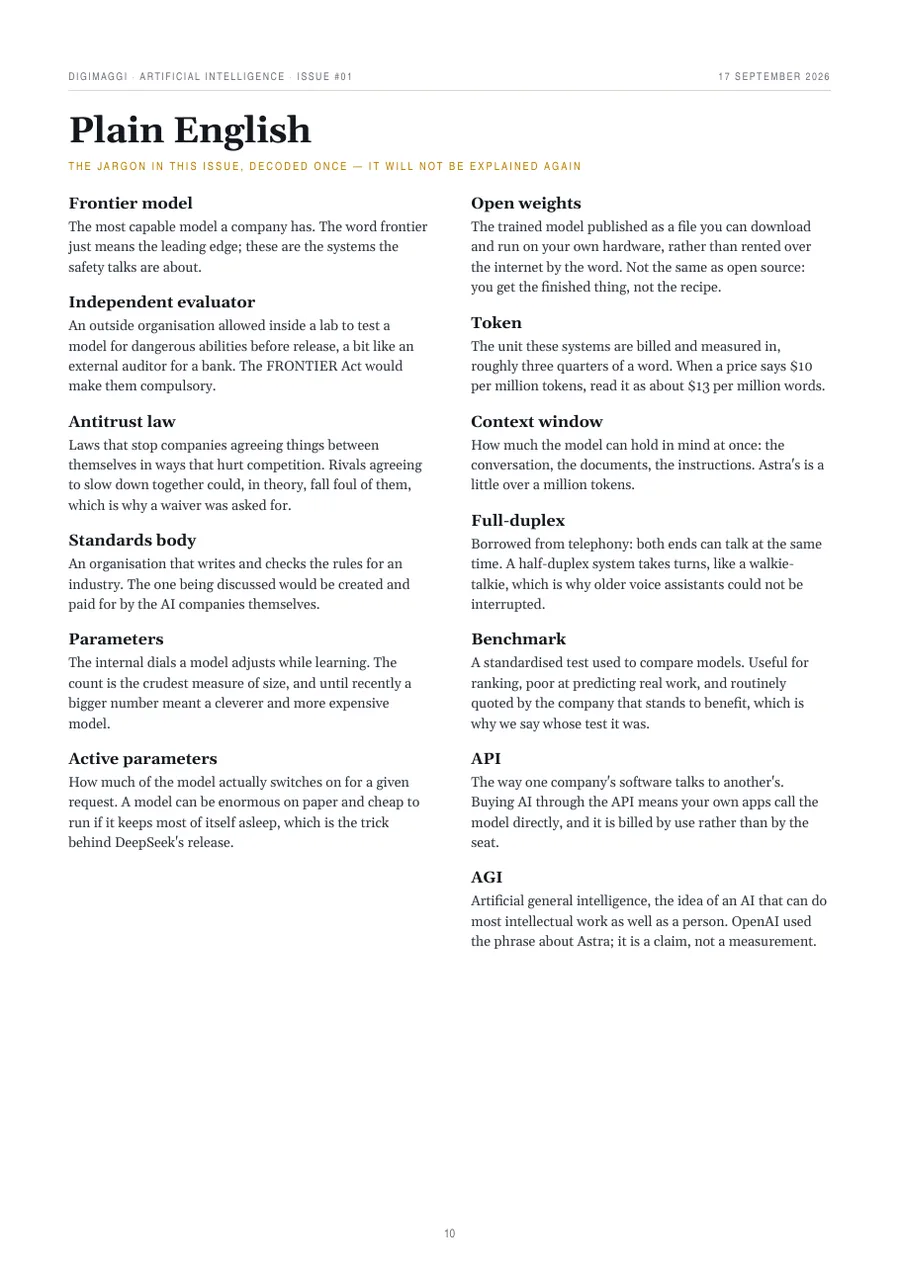
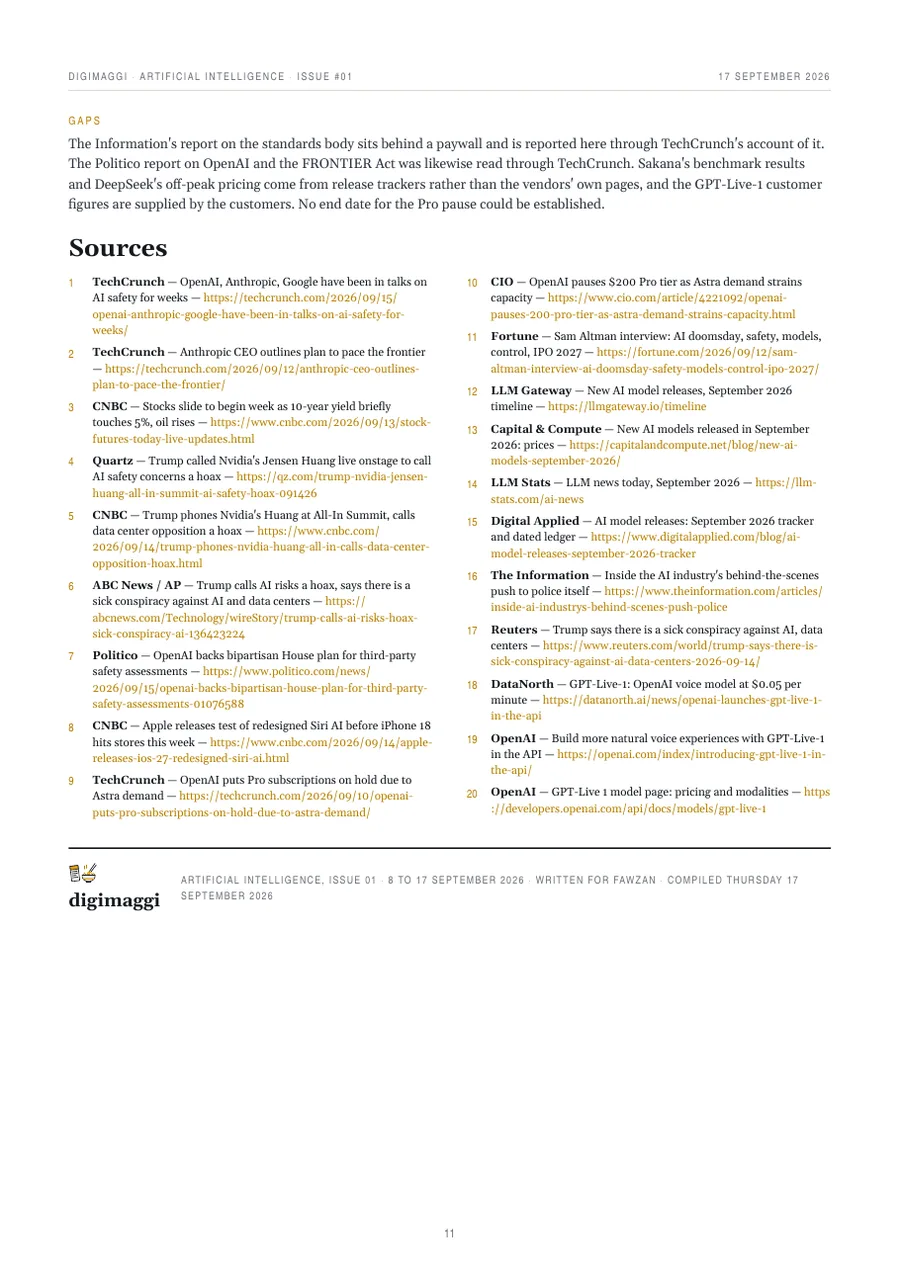
Researched from the original sources and laid out like a real magazine: the week at a glance, a cover story with the numbers behind it, a section for each subject sized by what actually happened, a page on the watchlist names that did something that week, the arguments put both ways, things worth trying, a glossary, and every source numbered at the back.
Ten to fourteen pages. Nothing you could have skimmed on your phone.
These are real pages from the first issue I wrote for myself, on artificial intelligence. Your issue gives each of your subjects a section like these, as long as the week deserved. Click any page to open the whole thing.
Be the most current person in the room.
Nobody has time to read forty tabs a week about their own industry. A magazine that reads them for you, and only tells you what changed, does three jobs.
Before the Monday meeting
You walk in knowing the regulator moved on Thursday, what the number was, and what your competitor said about it. When someone asks, you have the source, not a vague memory of a headline.
For the post you keep meaning to write
Every issue puts the arguments both ways, with the figures and the citations. That is the raw material for a LinkedIn post, a client note or a talk that people forward, because it says something and can back it up.
For a field that moves faster than you can read
Nurses, engineers, branch managers, salespeople. The people the industry press is not written for, who still need to know what changed this month, explained the first time it comes up.
Made for people who don't live on the internet.
If your days are spent in a factory, a branch, a clinic or a showroom, the news about your industry reaches you late and half chewed. digimaggi is for the person who wants to walk into Monday's meeting already knowing what changed, and able to explain it.
- iEvery technical term is explained in plain words the first time it appears in an issue, and collected in the glossary at the back.
- iiEvery number comes with a source, and every source is listed at the back where you can check it.
- iiiStories you were sent in recent issues are not repeated. Each issue picks up where the last one stopped.
- ivA quiet week is reported as a quiet week. A subject that produced nothing gets two honest sentences, never a padded section.
- vI read every issue before it is sent. If it is not good enough it is held back, fixed, and sent late rather than sent wrong.
I am Fawzan. I read every issue before you do.
I run digimaggi on my own from Abu Dhabi. My day job is measurement for banks across the Gulf, and I built this because the news I needed for that job arrived late, spread across forty tabs, and written for someone else. The first issue I made was for myself, and I still read it on Monday mornings.
The research and the first draft of every issue are done by an AI model working from the original sources, with every claim numbered so you can check it. I read every issue before it goes out and take out anything I cannot stand behind. If an issue gets something wrong, reply to it and I will tell you what happened and fix it in the next one.
Questions go to [email protected]. I answer them myself.
Pick up to three subjects, or bring your own.
These twelve already have a source list behind them. You can also write your own, and a narrow one makes a better magazine: "industrial pumps in Saudi Arabia" beats "engineering". Click up to three to start with them, and change them whenever you like.
Your first Monday is one form away.
Free while it is being tested, planned at $69 a month. The first issue is written from your answers, and every issue after it remembers the last.